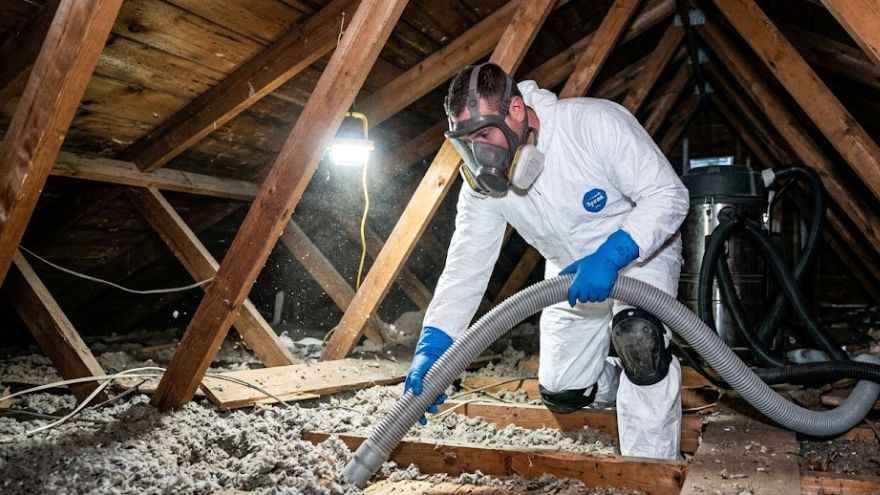
Attic rodent cleanup is the post-infestation restoration step that many Lubbock homeowners either skip or do incorrectly. After a roof-rat infestation, particularly one that has been active for more than a single season, the attic contains droppings, nesting material, urine-saturated insulation, and sometimes carcasses. These create real health risks if disturbed incorrectly, and real thermal performance losses if the insulation damage isn't assessed and addressed. This guide covers why cleanup matters, how to do it safely, and when insulation replacement is warranted.
Health risks from attic rodent contamination.
Roof rat droppings and urine carry pathogens including leptospirosis and, in the case of deer mice (which can coexist with roof rats in some Lubbock properties), hantavirus. The risk isn't from seeing the droppings, it's from disturbing them. Sweeping dry droppings in an enclosed attic space aerosolizes microscopic particles that can be inhaled. This is why the CDC protocol for attic rodent cleanup is specific: never sweep or vacuum without HEPA filtration, always wet the affected surfaces with an EPA-registered disinfectant before any physical contact, wear an N95 respirator minimum, and wear disposable gloves and coveralls.
In a Lubbock attic in summer, performing cleanup without respiratory protection in a confined, hot space is both a health and a heat-risk situation. Professional cleanup is the safer option for most homeowners, not just a convenience.
What attic rodent cleanup involves.
A complete attic cleanup program after a roof-rat infestation covers: nest location and removal (all primary and satellite nest sites, wet-treated before handling, bagged and removed), droppings removal with wet disinfection protocol, carcass recovery (any animals that died in the attic during treatment), surface disinfection of attic decking and structural members in affected areas, and enzymatic odor treatment where persistent odor remains after physical cleanup.
Insulation assessment.
The insulation assessment during cleanup is the step that determines whether the cleanup-only approach is enough or whether insulation removal and replacement is warranted. The two factors we evaluate are: urine saturation extent (measured by the area of insulation with visible discoloration or a persistent ammonia odor when handled) and compression level (how much the nesting and traffic have reduced the loft of the insulation, lowering its thermal R-value).
Partial saturation in a localized area can typically be addressed with targeted removal of the saturated section and surface disinfection of the surrounding area. Saturation across 20% or more of the attic floor area, or compression that has reduced R-value across a significant portion of the attic, warrants full replacement rather than cleanup-in-place. We assess honestly, we don't recommend replacement when cleanup is enough, and we don't recommend cleanup when replacement is the right answer.
The R-value impact of rodent damage.
Lubbock's Climate Zone 3 requires R-38 insulation for Energy Star compliance. Older homes in Tech Terrace, Overton, and Heart of Lubbock frequently have original insulation from the 1960s or 1970s at R-11 to R-19, already below current standards before any rodent compression damage. A multi-season roof-rat infestation in an attic that already had sub-standard insulation creates an opportunity: replacing the soiled insulation with R-38 blown-in fiberglass addresses both the contamination and the thermal performance gap simultaneously. The energy savings from the insulation upgrade meaningfully offset the replacement cost over time.
See our attic cleanup service and insulation replacement service for how we handle both steps. Free assessment, honest recommendation.
Related articles.
Step-by-step cleanup protocol: what we do on each visit.
Attic rodent cleanup follows a specific sequence regardless of infestation severity, because each step depends on the previous one. First, the attic is ventilated, ridge vents opened, attic fans activated, for a minimum of 30 minutes before anyone enters. Second, the technician enters in full PPE (Tyvek coverall, N100 respirator rated for biological aerosols, nitrile gloves, and eye protection) and wets all visible dropping deposits with a 10% bleach solution before any disturbance. Third, nesting material and concentrated dropping deposits are bagged in sealed plastic bags and removed. Fourth, the remaining insulation surface is sprayed with a broad-spectrum disinfectant and allowed to dwell for the manufacturer-required contact time. Fifth, insulation condition is assessed per the replacement criteria. Sixth, all removed material is disposed of per Lubbock municipal solid waste requirements, sealed plastic bags in standard collection, not burned or composted.
Post-cleanup air quality: what to expect and when to test.
After professional attic cleanup, the primary air-quality concern is residual particulates that may have entered HVAC ductwork during the active colony period. If the air-handler unit is located in the contaminated attic, which is common in Lubbock homes with an attic-mounted air handler, the intake draws attic air during operation and can distribute aerosolized particles through the ductwork. After cleanup, we recommend running the HVAC system on recirculation for 24 hours with a new MERV-11 or higher filter before returning to normal operation. For infestations that have been active for more than two seasons, or where the air-handler filter housing shows evidence of rodent entry or dropping deposits, duct cleaning and air-handler sanitation by an HVAC contractor is appropriate before resuming normal operation.