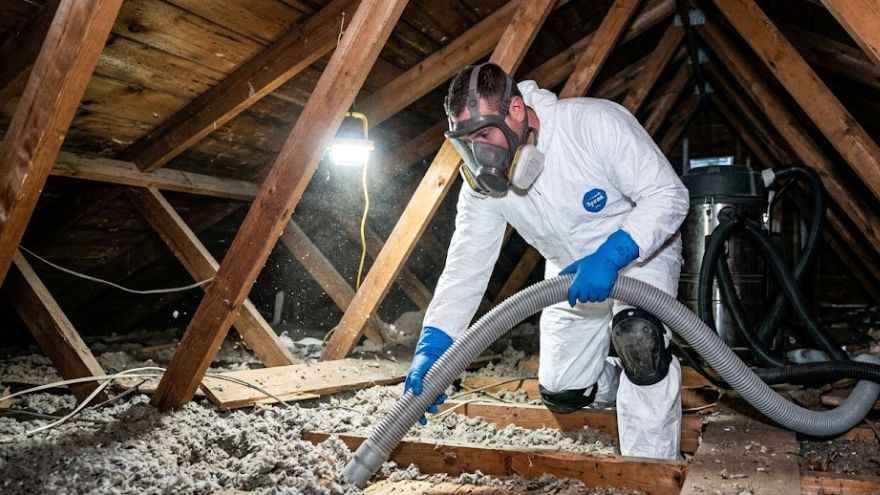
Rodent droppings in a Lubbock home aren't just a cleanliness problem, they're a documented public health risk if handled incorrectly. The specific diseases associated with rodent droppings in the South Plains region, the cleanup protocol that reduces exposure risk, and the situations where professional cleanup is the safer choice are covered in this guide.
Diseases associated with rodent droppings in Lubbock.
Hantavirus Pulmonary Syndrome.
Hantavirus is the most serious rodent-associated disease risk in the South Plains. The primary reservoir is the deer mouse (Peromyscus maniculatus), which is present throughout West Texas including the Lubbock area. The virus is transmitted by inhaling aerosolized particles from infected rodent droppings, urine, or nesting material. It is not transmitted person-to-person. Hantavirus Pulmonary Syndrome has a 38% case fatality rate in documented cases. Cases in Texas occur regularly, with higher incidence in rural West Texas. The risk in urban Lubbock is lower but not zero, deer mice coexist with house mice and roof rats in semi-rural and park-adjacent properties.
Leptospirosis.
Transmitted through contact with water or surfaces contaminated by infected rodent urine. Norway rats are a significant leptospirosis reservoir. The risk in Lubbock is primarily associated with flood-event situations where rodent-contaminated water contacts skin, mucous membranes, or eyes. In normal residential infestations, the risk is lower but present when handling contaminated surfaces without gloves.
Salmonellosis.
House mice and rats carry Salmonella in their digestive systems and contaminate food preparation surfaces with droppings and foot traffic. Kitchen infestations are the primary exposure route. Droppings in pantry areas and on food-contact surfaces are a food safety risk that warrants disinfection before the space is used again.
The correct cleanup protocol.
Never dry-sweep. Sweeping or vacuuming dry droppings aerosolizes particles. This is the primary exposure route for hantavirus. Wet first: Apply an EPA-registered disinfectant (a 1:10 bleach solution is the CDC standard alternative) to all droppings and nesting material. Let soak for at least 5 minutes. Remove wet: Remove the wetted material with disposable cloth or paper towels while wearing disposable gloves. Double-bag the waste. Disinfect the surface: Wipe down the area with additional disinfectant after removal. PPE: N95 respirator minimum for any enclosed space (attic, crawl space, small closet). Disposable gloves throughout. Coveralls for attic or crawl-space work.
When professional cleanup is the right choice.
Time matters. Damage compounds.
The droppings-in-an-accessible-cabinet situation is manageable DIY if the protocol above is followed. The attic-full-of-droppings situation is not: the physical conditions (enclosed space, heat, low clearance, extensive contamination) and the respiratory risk in an enclosed hot attic make professional cleanup with proper PPE the correct choice. See our droppings cleanup service and attic cleanup service for professional protocol.
Related articles.
The aerosolization risk: why disturbance matters more than contact.
The primary disease transmission pathway from rodent droppings isn't direct contact, it's aerosolization. When dried droppings are disturbed by sweeping, vacuuming, or air movement, particles become airborne and can be inhaled. This is why the CDC's guidance on rodent dropping cleanup specifically prohibits dry sweeping and recommends wet-disinfectant treatment before any removal. In Lubbock's low-humidity environment, droppings dry faster than in humid climates, making the aerosolization risk higher and the window between deposition and desiccation shorter. An attic with active rodent activity during a dry West Texas summer can have fully desiccated, aerosol-ready dropping deposits within 24 to 48 hours of deposition.
The practical implication is that disturbance risk exists even from normal attic activity: installing holiday decorations, checking insulation, or accessing HVAC equipment can disturb dried deposits without anyone intending to interact with them at all. We recommend wet-treatment of any visible dropping deposits with a 10% bleach solution before any handling or removal, regardless of whether the colony is still active.
When the exposure risk warrants professional cleanup: Lubbock-specific factors.
Wait too long and the bill grows.
The determination of when professional cleanup is warranted versus homeowner-managed cleanup follows a straightforward threshold: attic volume, deposit density, and HVAC integration. For ground-floor dropping deposits in a pantry, cabinet base, or garage, contained, accessible, and isolated from HVAC airflow, a properly protected homeowner using the wet-treatment protocol can manage cleanup safely. For attic deposits in an HVAC-integrated space, which describes most Lubbock homes with air-handler units or ductwork running through the attic, professional cleanup is the correct choice. Air-handler units in contaminated attics can pull aerosolized particles through the intake and distribute them through ductwork into living spaces during normal operation.
Leptospirosis and salmonella: the other rodent-associated disease risks in Lubbock.
Hantavirus receives the most attention because it's the most serious, but two other rodent-associated disease risks are more common in the Lubbock area. Leptospirosis is transmitted through contact with water or soil contaminated with infected rodent urine: relevant for Lubbock properties with Norway rat activity near plumbing, irrigation systems, or any water features. Norway rats are the primary reservoir and shed leptospires in their urine continuously throughout their lifespan. Contact through skin abrasions or mucous membranes with contaminated water sources is the typical exposure pathway. Salmonella transmission from rodents occurs through food contamination: rodents moving through kitchen storage areas, across food preparation surfaces, or through food packaging deposit salmonella from their droppings and contact footprints. For Lubbock properties with mouse activity in kitchen areas, any food in unsealed containers in an affected area should be treated as potentially contaminated. Both conditions are treatable with antibiotics when diagnosed promptly, but prevention through elimination of the reservoir is the correct primary approach.