Storage unit rodent control in Lubbock, TX.
Last reviewed: January 2026
Self-storage hits a problem no other commercial building has: tenants store food, soft goods, and cardboard for months at a time in units that nobody inspects until move-out. By then a colony is usually well-set. Our storage-facility programs run perimeter bait stations along the unit row exterior, set monitoring stations inside climate-controlled buildings, and document each unit at turnover so the next tenant moves into a clean space.
Call (806) 207-3665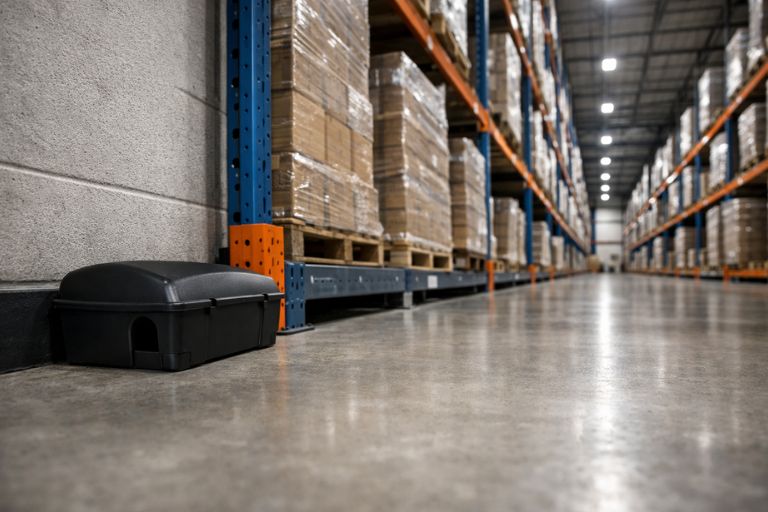
Storage unit rodent control is a specialized rodent management program for self-storage facilities, climate-controlled and non-climate-controlled, where the combination of infrequently accessed units, stored household goods, and metal-building construction creates rodent conditions requiring a purpose-built exterior bait and interior trap program. In Lubbock, TX, storage facilities are concentrated along the Loop 289 corridor and the major commercial arterials.
Why self-storage facilities are high-risk rodent environments.
Lubbock pressure rises in October, falls in May.
Storage facilities concentrate the conditions rodents need: undisturbed shelter in the form of stored goods (cardboard boxes, upholstered furniture, clothing, and paper), low human traffic that limits natural disturbance, and metal-building construction with gaps at every wall penetration. Norway rats access facilities through dock areas and foundation gaps; house mice access through the gaps around unit door frames and the small penetrations around conduit runs that most storage operators don't inspect. Once established in a unit, the colony can spread to adjacent units through shared wall voids before the tenant ever opens the door.
What storage unit rodent control includes.
One inspection. One plan. One follow-up visit.
- Facility assessment: exterior perimeter, drive aisles, dumpster area, and any shared utility spaces assessed before program design.
- Exterior bait station network: commercial-grade tamper-resistant stations along the facility perimeter and concentrated at drive aisle entry points and dumpster areas.
- Drive-aisle trapping: snap traps or glue boards placed along drive-aisle wall bases in covered positions between units.
- Unit-door exclusion: unit door frame gaps and floor-seal condition assessed; recommendations provided for units with significant gaps.
- Scheduled service rotation: monthly station service, drive-aisle trap check, and documentation.
- Tenant incident documentation: when a tenant reports active colony in a unit, we provide a written service record for the tenant file and management records.
Pricing in Lubbock.
Inspections are free. Quotes are firm.
| Scenario | Typical range | Notes |
|---|---|---|
| Small facility (under 100 units) | $500–$900 | Exterior station install + drive-aisle trapping setup |
| Medium facility (100–300 units) | $800–$1,500 | Larger perimeter, more stations and drive aisles |
| Large facility (300+ units) | Quoted on-site | Full facility assessment required |
| Monthly service rotation | $200–$500/month | Station service + trap check + documentation |
Inspections are free. Quotes confirmed before work starts.
Frequently asked questions.
Are storage facilities required to have pest control programs?
How do rodents get into storage units?
What happens if a tenant reports active rodent activity in their unit?
Do bait stations in a storage facility create risk for tenants?
How often do storage facilities need service visits?
Can you treat a unit that a tenant reports has active mice?
Do you serve storage facilities outside Lubbock?
We return after treatment to confirm the activity has stopped, at no additional charge. No follow-up = no sign-off.
We cover all of Lubbock County: call (806) 207-3665.
Storage facility rodent programs in Lubbock. Tenant documentation included. Free facility assessment.
Call (806) 207-3665Questions first? Send a message and we'll call you back.