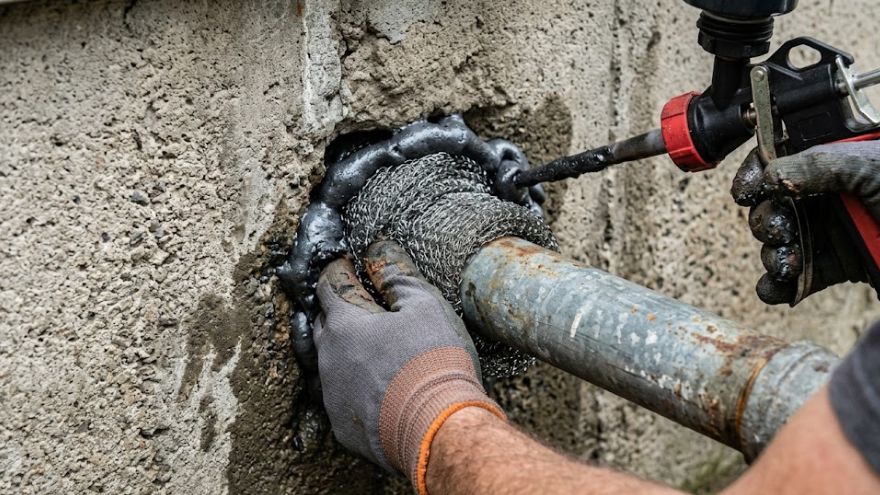
A common question from Lubbock homeowners dealing with rat activity is what the animals are actually capable of damaging. The short answer: rats can chew through more than most people expect, and the most serious risks, electrical wiring and PVC plumbing, are the ones homeowners are least likely to discover on their own. This guide covers what rats can and can't chew through, and what the risks are.
What rats can chew through.
Soft wood and drywall.
Pine, cedar, and most framing lumber are easy chewing material for rats. Drywall is similarly soft. Rats chew through both primarily to enlarge access gaps, an existing 1/2-inch gap in drywall becomes a 2-inch opening after a few nights of gnawing. In Lubbock homes, we most commonly find gnaw marks at the base of interior walls (where wall meets floor framing), at cabinet toe-kicks, and at the garage-to-interior-space doorframe base.
Plastic and PVC pipe.
Roof rats and Norway rats can both chew through thin-wall PVC and ABS plastic pipe. Drain pipe and conduit are common targets. A gnawed PVC drain pipe under a bathroom or kitchen can leak slowly inside the wall, and may not be discovered until water damage appears at the surface. Thin-wall electrical conduit is similarly vulnerable.
Electrical wiring insulation.
This is the most serious chewing risk from rats in Lubbock homes. Rats gnaw on wire insulation as a dental behavior, they don't consume it, but they wear down their incisors on the insulation surface. A wire with chewed insulation has exposed copper conductor that can arc against adjacent metal or ignite insulation material in contact with it. The Consumer Product Safety Commission identifies rodent wire chewing as a contributing factor in a documented percentage of residential electrical fires. In Lubbock, we flag every instance of wire chewing found during attic inspections and recommend an electrician assessment. The older homes in Tech Terrace, Overton, and Dunbar Manhattan Heights, where multi-season attic infestations are more common, have the highest rate of wire chewing we find.
Aluminum sheet metal.
Thin aluminum can be chewed through, though it takes more effort than wood or plastic. Heavier-gauge galvanized sheet metal and hardware cloth are practically unchewable for rats, which is why they're the recommended exclusion materials rather than aluminum flashing or thin metal.
What rats cannot chew through.
Rats cannot chew through: cast iron or steel pipe, concrete (though they can exploit existing cracks), glass, and properly installed hardware cloth or sheet metal with a gauge of 24 or heavier. This is why hardware cloth is the standard for exclusion sealing, it closes the gap physically without the rat being able to re-open it by chewing.
The fire risk from wire chewing.
Wire chewing by rats is the damage type we take most seriously in attic inspections. Unlike structural gnawing, which is visible and can be assessed, wire damage in an attic often isn't visible from below and may not produce any immediate symptom until a connection failure or arc event occurs. If your property has had a confirmed roof-rat attic infestation, especially a multi-season infestation in an older Lubbock home, an electrician inspection of the attic wiring is a reasonable precaution even if no specific damage has been identified. We note wire chewing in every inspection report we produce.
If you find gnaw marks on wiring during any inspection, treat it as a priority: call an electrician before relying on the circuit for normal use. See our attic cleanup service for how we document damage found during post-infestation inspections.
Related articles.
Why wire chewing is a continuous behavior: not just damage during entry.
The cause changes by season.
Rats chew on wire insulation not primarily to create entry points or nest material, they chew because their incisor teeth grow continuously (3–5 inches per year) and must be worn down through gnawing. Wire insulation, wood framing, and plastic pipe are gnawing substrates that a rat encounters in its normal territory. The implication is that wire damage doesn't stop when the rat finds food and water, it continues throughout the animal's presence in the structure. A single roof rat living in a Lubbock attic for one season will chew on many more wire segments than it needs to. The cumulative exposure area per chewed wire segment is small, but the total number of segments exposed across a season can be significant. An attic inspection after a multi-season infestation should include a visual sweep of all visible wiring for chew marks: including low-voltage wiring (thermostat lines, speaker cables, data cables) that is often overlooked because it doesn't carry household current but can still create shorts in control systems.
Material durability in Lubbock conditions: what holds long-term.
Material selection for rodent exclusion in West Texas needs to account for both rodent gnawing force and the thermal cycling that affects material integrity over time. Copper mesh holds indefinitely against rodent gnawing, rats cannot chew through copper mesh of 20-gauge or heavier, and it does not rust or degrade in Lubbock's alkaline soil environment. Hardware cloth (1/4-inch galvanized steel) is the correct material for larger openings, it withstands gnawing and temperature cycling. PVC pipe in direct soil contact is vulnerable to Norway rat gnawing, particularly the thinner-wall Schedule 20 used for irrigation laterals. Cast iron pipe, copper supply line, and CPVC in conduit are not gnawable by rats. Electrical conduit (metal) stops gnawing; plastic conduit at grade level does not. These material distinctions matter when assessing a property's long-term exclusion strategy rather than just the current entry points.