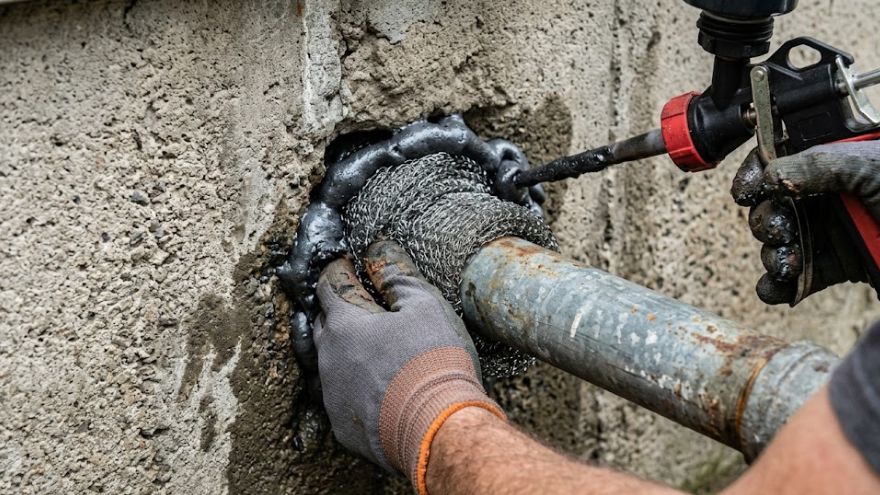
Crawl-space rodent sealing is one of the most overlooked exclusion steps in Lubbock homes that have pier-and-beam or partial-crawl-space foundations. The crawl space provides direct ground-level access for both house mice and Norway rats, and the physical conditions, low clearance, darkness, and typically degraded vent screening, mean it's rarely inspected until an active colony is well established. This guide covers what to check, what to seal, and how to do it correctly.
Does your Lubbock home have a crawl space?
Not all Lubbock homes do. Slab-on-grade construction, the dominant foundation type for homes built after the 1970s, doesn't have a crawl space. Pier-and-beam construction, common in homes built before the 1960s and in some areas with specific soil conditions, has an accessible crawl space. Some homes have partial crawl spaces at lower-slope areas or where the grade drops at the perimeter. If you're not sure, look for a crawl-space access hatch on the exterior foundation perimeter or inside a closet near the home's edge.
Foundation vent inspection and sealing.
Foundation vents are the primary rodent entry point for crawl-space infestations. Most Lubbock pier-and-beam homes have concrete-block or poured-concrete foundation vents designed to allow airflow. These vents should have screening, but in older homes the screening is typically worn plastic or fiberglass that has cracked and pulled away from the frame over decades. Walk the exterior foundation perimeter and inspect every vent. Any vent with damaged, missing, or pulled-away screening is an open entry point. Install hardware cloth (1/4-inch galvanized mesh) inside or behind the existing vent frame, covering the full opening. Remove worn screening before installing hardware cloth, don't install over the top.
Pier-base gap sealing.
Concrete or treated-wood piers contact the grade surface at a point where a gap often develops from soil settling and the base of the pier lifting slightly over time. These gaps are typically 1/4 to 1/2 inch, exactly right for a house mouse. Fill them with hydraulic cement or concrete patch material, worked into the gap at the pier base. For gaps that are actively moist or in a drainage path, allow the area to dry before sealing.
Utility penetration sealing at the foundation.
Plumbing supply and drain pipes, electrical conduit, and HVAC ducts that penetrate the foundation or floor system through the crawl space area are potential entry points at each penetration location. From inside the crawl space, inspect each penetration where it passes through the foundation or floor. Fill gaps with foam-and-mesh appropriate to the gap size.
Crawl-space access panel.
The crawl-space access hatch or panel is often overlooked. If the panel doesn't sit flush and seal completely when closed, it's an entry point. Check the panel condition, replace worn panels, and add weatherstripping to the perimeter of the frame where the panel contacts it.
Vapor barrier assessment.
The vapor barrier (plastic sheeting on the crawl-space floor) keeps ground moisture from entering the crawl space. Rodents will shred and nest in vapor barrier material. During the sealing inspection, check the vapor barrier condition: if it's shredded, displaced, or heavily contaminated with droppings, it should be replaced after the exclusion sealing is complete. Damaged vapor barrier also accelerates wood wear in the floor system, so it's a secondary issue beyond the rodent concern.
Our crawl-space rodent sealing service covers all of the above steps, including physical entry into the crawl space for full inspection of all penetrations and vent openings. We flag vapor barrier damage and provide replacement recommendations with honest assessment of whether replacement is warranted.
Related articles.
Material specifications for West Texas temperature extremes.
Material selection for crawl-space sealing in Lubbock requires accounting for temperature range that eliminates materials that work well in moderate climates. Expanding foam, the most commonly used DIY sealant, fails in West Texas conditions within 18–24 months. The thermal cycling between summer attic temperatures (130°F+ in an unventilated crawl space) and winter freeze events (0°F or below during hard freezes) causes foam to expand and contract beyond its elasticity, creating cracks that restore access. Foam also provides no physical barrier to rodent gnawing, a motivated Norway rat chews through a foam seal in under a minute. Hardware cloth (1/4-inch galvanized steel mesh) is the correct material for all rodent-exposed openings: foundation vents, utility sleeves, and pier-base gaps. Copper mesh is correct for weep holes and smaller openings. Sheet metal flashing is correct for the foundation-grade interface on pier-and-beam construction. All hardware cloth and sheet metal should be fastened with corrosion-resistant screws or stainless staples, standard galvanized fasteners rust through in 5–7 years in Lubbock's alkaline soil conditions.
DIY crawl-space sealing vs. professional exclusion, what the difference actually is.
The difference between DIY crawl-space sealing and professional exclusion isn't primarily the physical materials applied, it's the inspection process that identifies every entry point before sealing begins. A homeowner sealing the foundation vents they can see misses the utility sleeve behind the water heater, the settled gap at the south pier base, and the gap where the original HVAC condensate drain exits the foundation. Each of those unaddressed openings makes the sealed vents irrelevant, because the rodents simply use the path of least resistance. Professional exclusion includes a mapped entry-point assessment of the entire crawl-space perimeter before any sealing, the goal is a complete physical barrier, not a partially sealed foundation with several remaining access routes.